
Irreversible xenon insertion into a small-pore zeolite at moderate pressures and temperatures
Irreversible xenon insertion into a small-pore zeolite at moderate pressures and temperatures
Abstract:
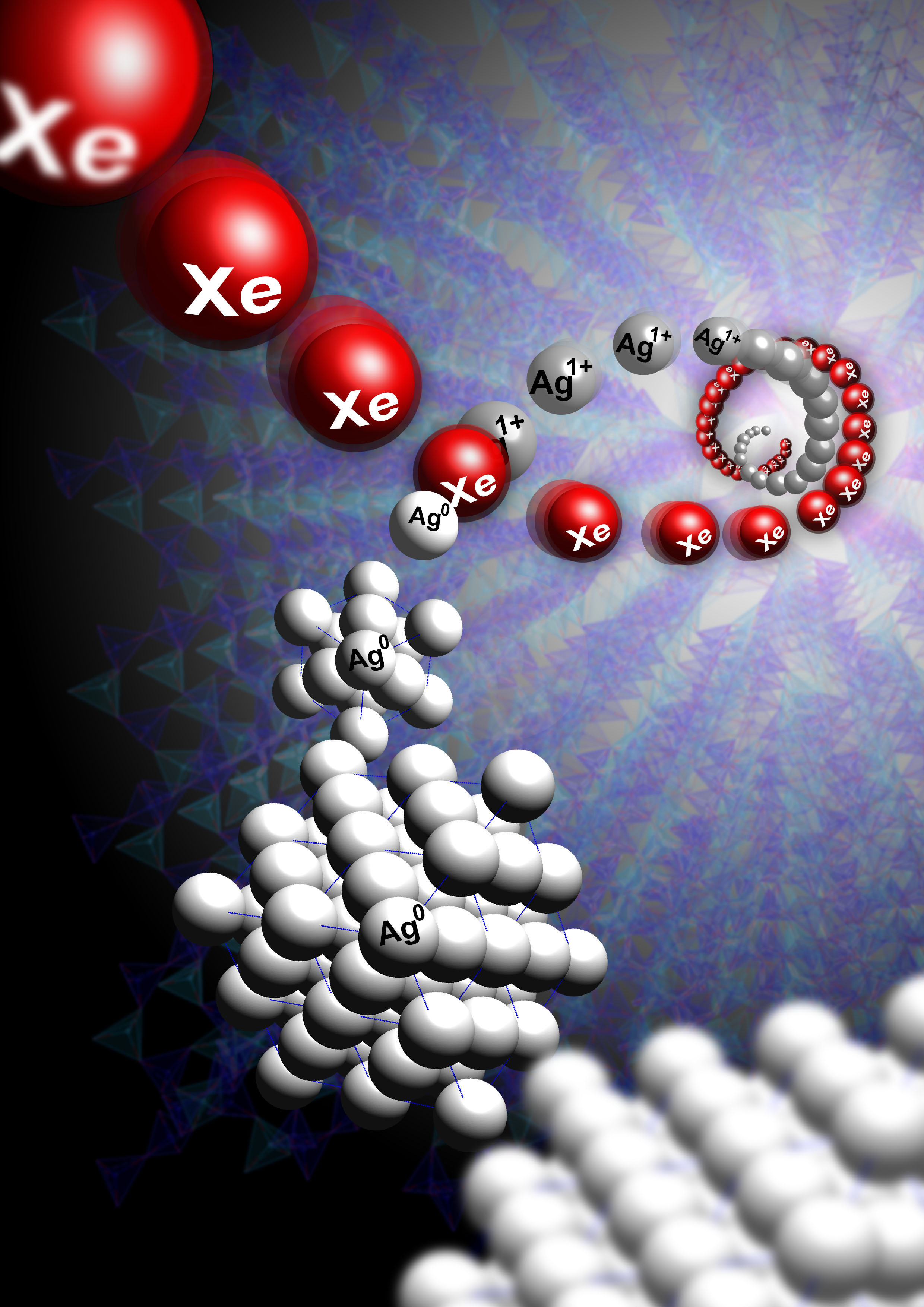
Pressure drastically alters chemical and physical properties of materials and allows structural phase transitions and chemical reactions to occur that defy much of our understanding gained at ambient conditions. Particularly exciting is the high-pressure chemistry of Xenon, which is known to react with hydrogen and ice at high pressures, and form stable compounds under pressure. Here we show that Ag16Al16Si24O80·16H2O irreversibly inserts Xe into its micropores at 1.7 GPa and 250 °C while Ag+ reduces to metallic Ag and possibly oxidizes to Ag2+. In contrast to Krypton, Xenon is retained within the pores of this zeolite after pressure release and requires heat to desorb. This irreversible insertion and trapping of Xenon in Ag-natrolite at moderate conditions sheds new light on chemical reactions that could account for a Xenon deficiency relative to Argon observed in terrestrial and Martian atmospheres.
Back to: Planetary Materials III Posters