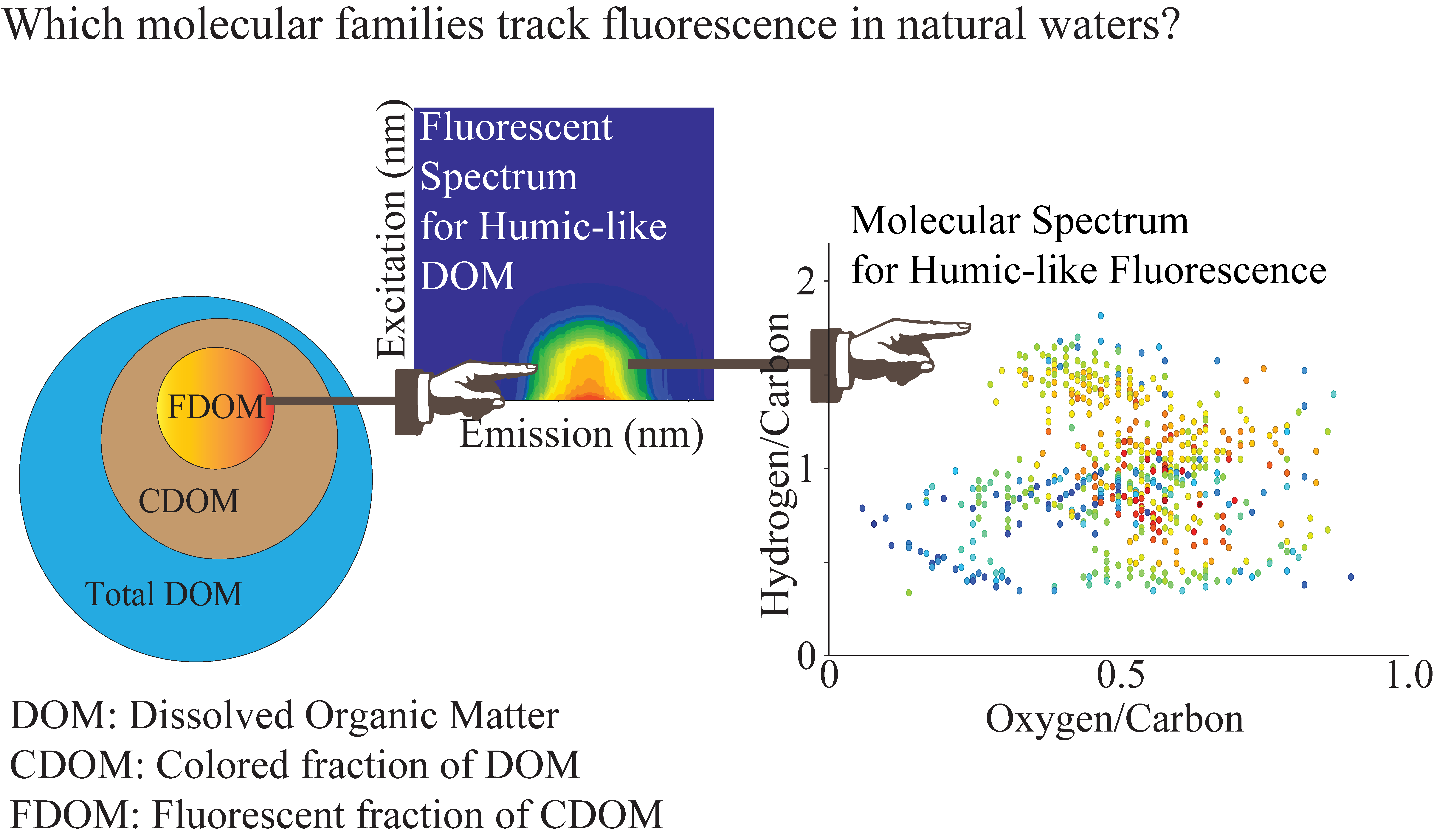
Biogeochemical interpretations of colored dissolved organic matter optical signatures
Aron Stubbins1, Robert G Spencer2, Dr. Paul James Mann3, Thorsten Dittmar4, Jutta Niggemann5, Robert Max Holmes6, James W McClelland7, Paul Del Giorgio8, Yves Prairie8, Jean-Francois Lapierre9 and Martin Berggren10, (1)Northeastern University, Marine and Environmental Sciences, Boston, MA, United States, (2)Florida State University, Department of Earth, Ocean & Atmospheric Science, Tallahassee, FL, United States, (3)Northumbria University, Newcastle-Upon-Tyne, United Kingdom, (4)University of Oldenburg, Institute for Chemistry and Biology of the Marine Environment (ICBM), Oldenburg, Germany, (5)Institute for Chemistry and Biology of the Marine Environment (ICBM), Carl von Ossietzky Universität Oldenburg, Oldenburg, Germany, (6)Woods Hole Research Center, Falmouth, MA, United States, (7)The Ecosystems Center, Marine Biological Laboratory, Woodshole, United States, (8)University of Quebec at Montreal UQAM, Montreal, QC, Canada, (9)University of Montreal, Department of Biological Sciences, Montréal, QC, Canada, (10)Lund University, Lund, Sweden
Abstract:
The optical properties of colored dissolved organic matter (CDOM) in surface waters are visible from space and observable throughout the water column in real time using in situ sensors. Due to their ease of measurement, CDOM optical properties are used as proxies for the quantity, quality and processing of dissolved organic matter (DOM) in natural waters. This talk will focus upon the use of these optical signatures to provide insight into the cycling of DOM. Examples will include the use of color to estimate quantitative fluxes and the molecular composition of organics in natural waters.