Testing the hydrologic utility of geologic frameworks for extrapolating hydraulic properties across large scales
Abstract:
Five sets of hydraulic conductivities at about 500 pilot points were estimated by simultaneously interpreting all aquifer tests with a different geologic framework for each set. Each geologic framework was incorporated as prior information that assumed homogeneous hydraulic conductivities within each geologic unit. Complexity of the geologic frameworks ranged from an undifferentiated mass of rock with a single unit to 14 unique geologic units. Analysis of the model calibrations showed that a maximum of four geologic units could be differentiated where each was hydraulically unique as defined by the mean and standard deviation of log-hydraulic conductivity.
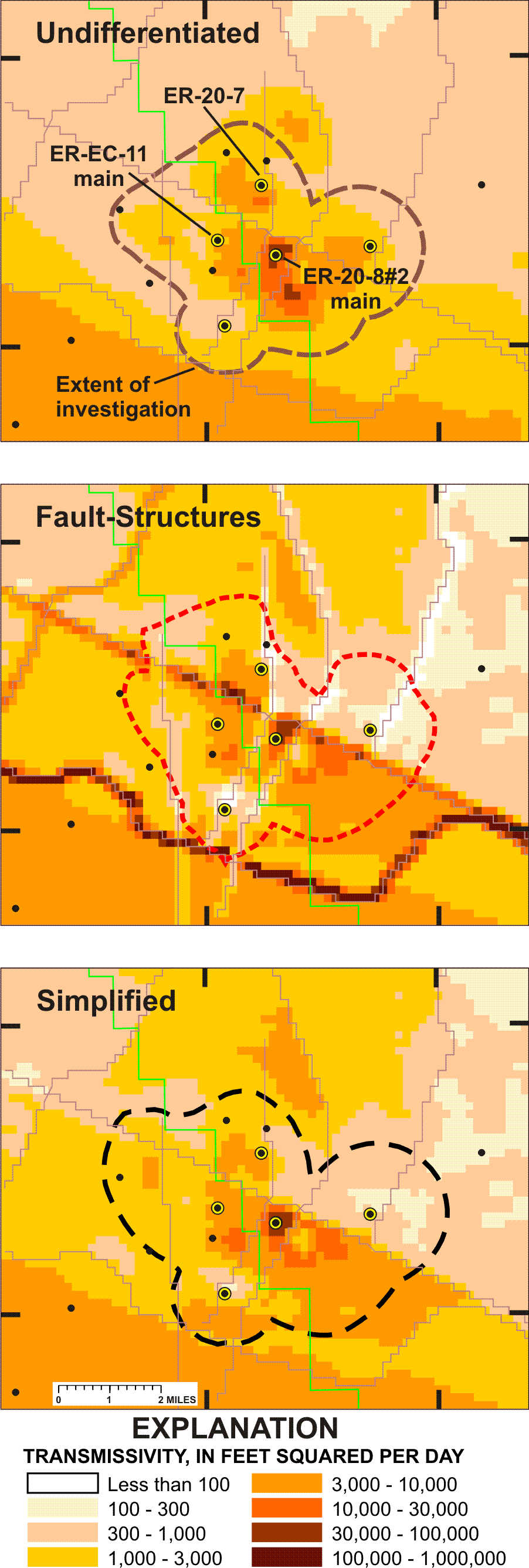
Consistency of hydraulic property estimates within extents of investigation and effects of geologic frameworks on extrapolation were evaluated qualitatively with maps of transmissivity. Distributions of transmissivity were similar within the investigated extents regardless of geologic framework except for a transmissive streak along a fault in the Fault-Structure framework. Extrapolation was affected by underlying geologic frameworks where the variability of transmissivity increased as the number of units increased.