Robustness to Resilience: Transforming Hydrologic Risk
Abstract:
We consider risk as the probability of an adverse event and its consequence. Increasing exposure to risk in engineered watersheds is typically driven by increasing the consequences for equally probable events, as the same magnitude flood causes more damage. However, changing climate and land use alters hydrology such that large flooding is more probable. Uncertainty in assessing the probability or consequence of these events is increased by anthropogenic change.
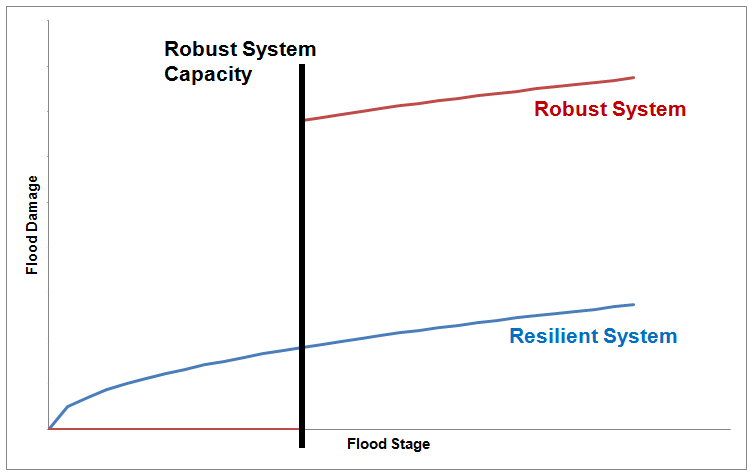
Robust systems with a fixed capacity become less reliable in a changing environment. Communities will require resilient, adaptable measures for reducing current and future potential risk exposure. Resilient measures – such as floodplain management and integrated water resources management - will require some amount of concession to damage from small but frequent detrimental events in order to reduce the risk of catastrophe.