Discovery and Biogeochemical Investigation of Chlorinated Industrial Waste in the Deep Ocean
Discovery and Biogeochemical Investigation of Chlorinated Industrial Waste in the Deep Ocean
Abstract:
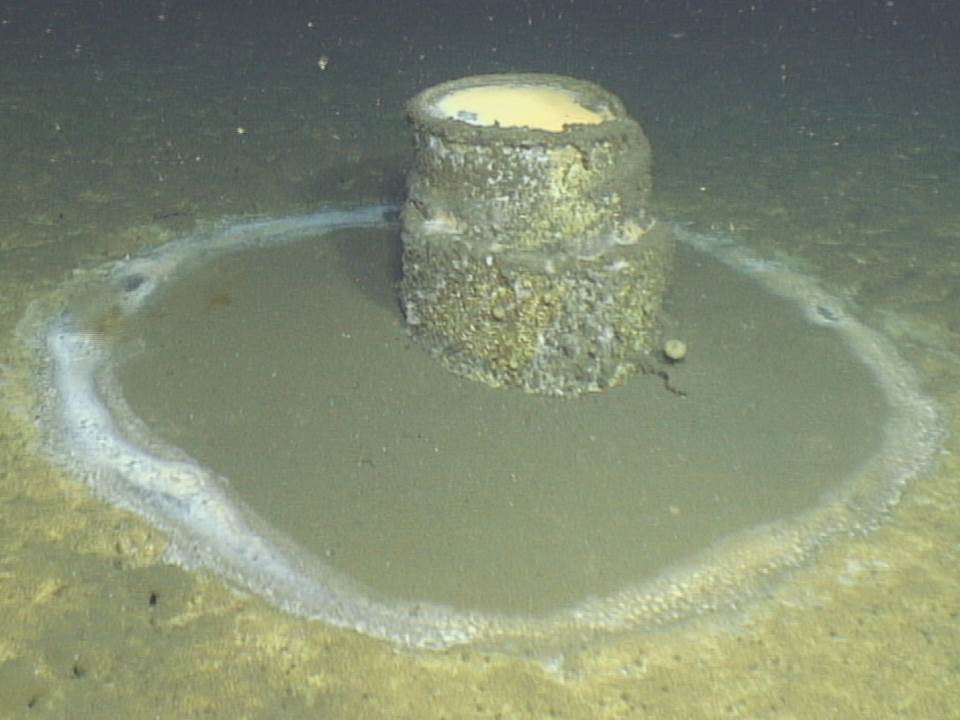
Prior to the 1972 US ban on DDT use, dumping of solid waste from DDT manufacturing was permitted at two locations off the coast of Southern California. Between 1947 and 1961, 37-53 million liters of DDT waste (containing an estimated 350-700 metric tons of DDT) were disposed of at these deep-ocean dumpsites. In 2011 and 2013 we explored these sites with ROV Jason and AUV Sentry, discovering the remains of ~60 barrels scattered across dumpsite 2. Strikingly, many of these barrels were surrounded by distinctive white rings suggestive of microbial activity. We describe our identification and exploration of these sites and present results from chemical analysis of sediment cores collected around waste barrels. DDT and its degradation products (DDE, DDD and DDMU) were detectable at ng to μg per gram concentrations and showed spatial trends with both distance and depth around barrels. Analysis of microbial community DNA provides a first look at the role of microbiological processes in shaping these trends.