Loss of Shallow Geothermal Resources in Urban Environment Due to the Absence of Thermal Management Policies
Abstract:
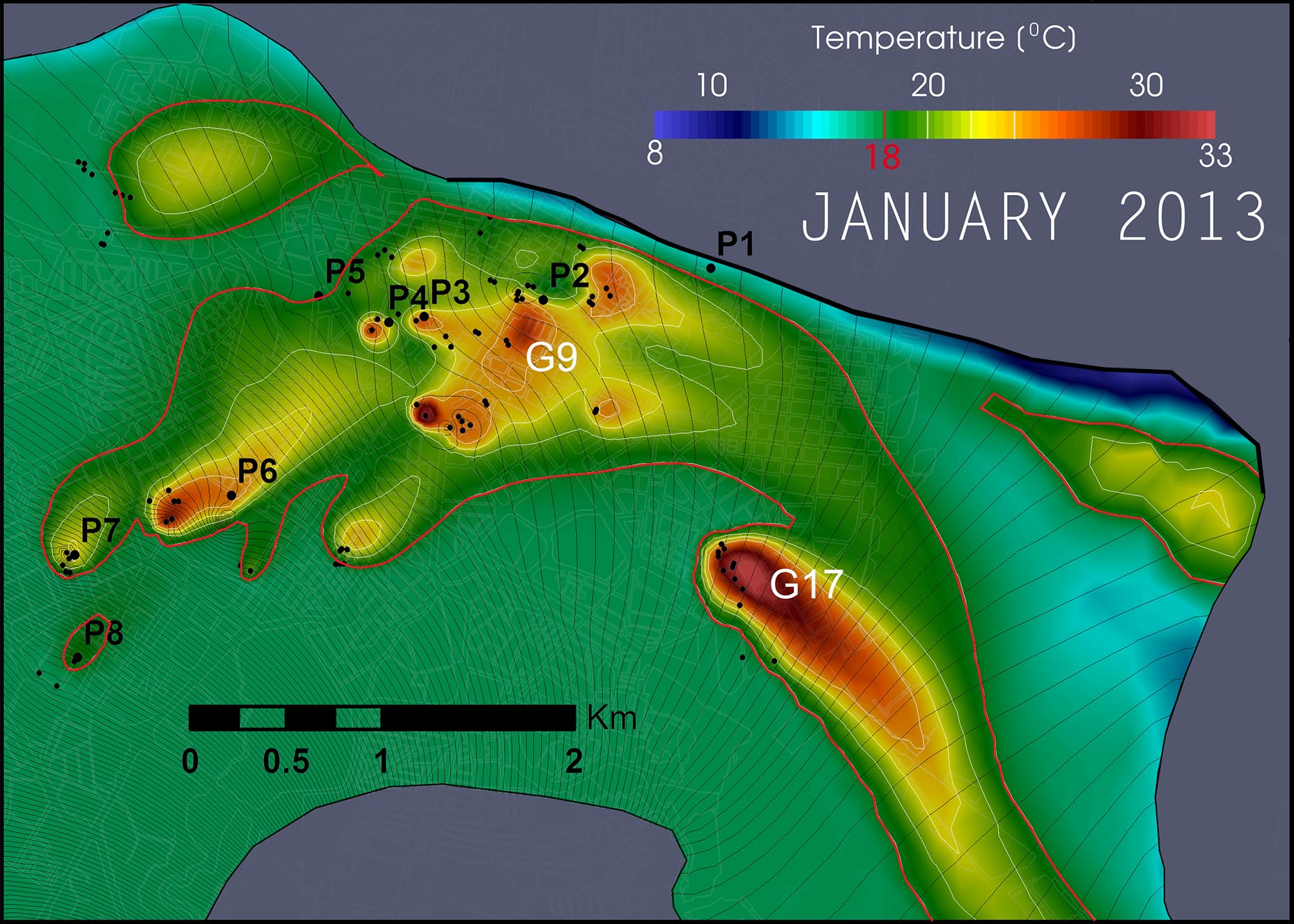
A transient groundwater flow and heat transport model was developed to reproduce complex high-resolution data obtained from local monitoring specifically designed to control the aquifer respond to geothermal exploitation. The model aims to reproduce the groundwater flow and heat transport processes in a shallow alluvial aquifer exploited by 27 groundwater heat pumps and influenced by a river-aquifer relationship dominated by flood events mainly occurring in winter when the surface temperature is between 3 and 10 ºC.
The results from the simulations have quantified the time-space thermal interference between exploitation systems and the consequences of river-aquifer thermal exchange. The results obtained showed the complexity of thermal management of the aquifer due to the transient activity of exploitations over space and time. With the actual exploitation regime of shallow geothermal resources in the investigated area the model predicts a temperature rising tendency in the production wells until 2019 which can compromise the coefficient of performance of heat pumps. This situation can be interpreted as a warning, highlighting the need for an appropriate thermal management of the aquifer resources to ensure their long term sustainability.