Determination of ITM Key Parameters By the Ionospheric Connection Explorer (ICON)
Thomas J Immel1, Scott England2, Stephen B Mende3, Jonathan J Makela4, Brian J Harding3, Andrew W Stephan5, Farzad Kamalabadi6, Roderick A Heelis7, Christoph R Englert8, Jerry Edelstein9, Jeffrey M M Forbes10, Astrid I Maute11, Geoff Crowley12, Joseph D Huba13, John Harlander14, Gary R Swenson15, Harald U Frey16, Gary S Bust17, Jean-Claude M C Gerard18, Benoit A Hubert18, Douglas E Rowland19, David L Hysell20, Akinori Saito21, Sabine Frey22, Manfred Bester16 and William Craig22, (1)University of California Berkeley, Space Sciences Laboratory, Berkeley, United States, (2)Virginia Polytechnic Institute and State University, Aerospace and Ocean Engineering, Blacksburg, United States, (3)University of California, Berkeley, Space Sciences Laboratory, Berkeley, United States, (4)University of Illinois Urbana-Champaign, Department of Electrical and Computer Engineering, Urbana, IL, United States, (5)U.S. Naval Research Laboratory, Washington, United States, (6)University of Illinois, Urbana, IL, United States, (7)University Texas Dallas, Richardson, United States, (8)Naval Research Lab DC, Space Science Division, Washington, DC, United States, (9)Univ of California, Berkeley, CA, United States, (10)University of Colorado at Boulder, Ann and H.J. Smead Department of Aerospace Engineering Sciences, Boulder, United States, (11)University of Colorado, Boulder, CIRES, Boulder, United States, (12)Orion Space Solutions, Louisville, United States, (13)Syntek Technologies, Fairfax, United States, (14)SCSU, St Cloud, MN, United States, (15)University of Illinois at Urbana Champaign, Electrical and Computer Engineering, Urbana, United States, (16)University of California, Berkeley, Space Sciences Laboratory, Berkeley, CA, United States, (17)JHU Applied Physics Lab, Laurel, MD, United States, (18)University of Liège, Liège, Belgium, (19)NASA Goddard Space Flight Center, Greenbelt, MD, United States, (20)Cornell University, Earth and Atmospheric Sciences, Ithaca, NY, United States, (21)Kyoto University, Kyoto, Japan, (22)University of California Berkeley, Berkeley, CA, United States
Abstract:
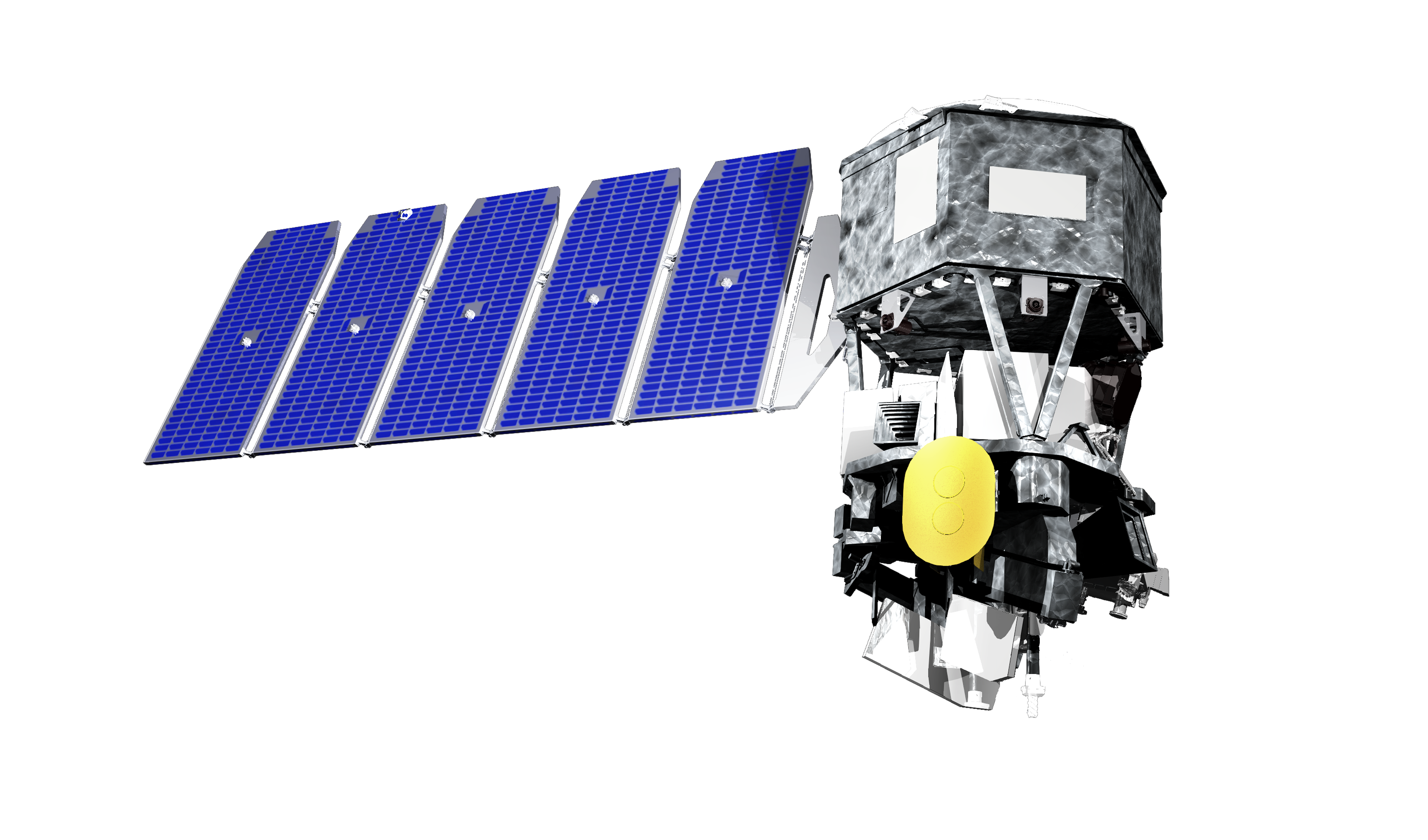
Selected for development by NASA in 2013, ICON is a mission that will launch in 2017 to discover the source of strong day-to-day variability in Earth’s space environment. Recent observations continue to raise questions about the effects and interaction of these in our geospace environment, and how these vary between extremes in solar activity. To address these, ICON will measure all key parameters of the atmosphere and ionosphere simultaneously and continuously with a combination of remote sensing and in-situ measurements. ICON will fly in a 27-degree inclination orbit with a payload designed to observe the processes of vertical wave coupling in the Ionosphere/Thermosphere/Mesosphere system, how these processes influence the state of the system itself, and how that state preconditions the system for modification by external influence (e.g. solar and solar wind forcing). ICON will remotely observe winds and temperatures in the 90-150 km region while measuring the highly variable electric field in the ionosphere on magnetically connected field lines. Simultaneous to these observations, ICON remotely observes the thermospheric composition and density, and ionospheric density in day and night. The retrievals involved and resultant precision in the determination of key parameters will be presented. The scientific return from ICON is enhanced by dynamic operational modes of the observatory that provide capabilities well beyond that afforded by a static space platform. Careful selection of these modes and the selective implementation of instrument redundancy provide the ability to operate with large technical margins that support the greatest return of science data.