Effective management of brackish irrigation water for a network of farms along a river by considering soil-water-plant feedback mechanisms: a conceptual framework development
Abstract ID#: 33198
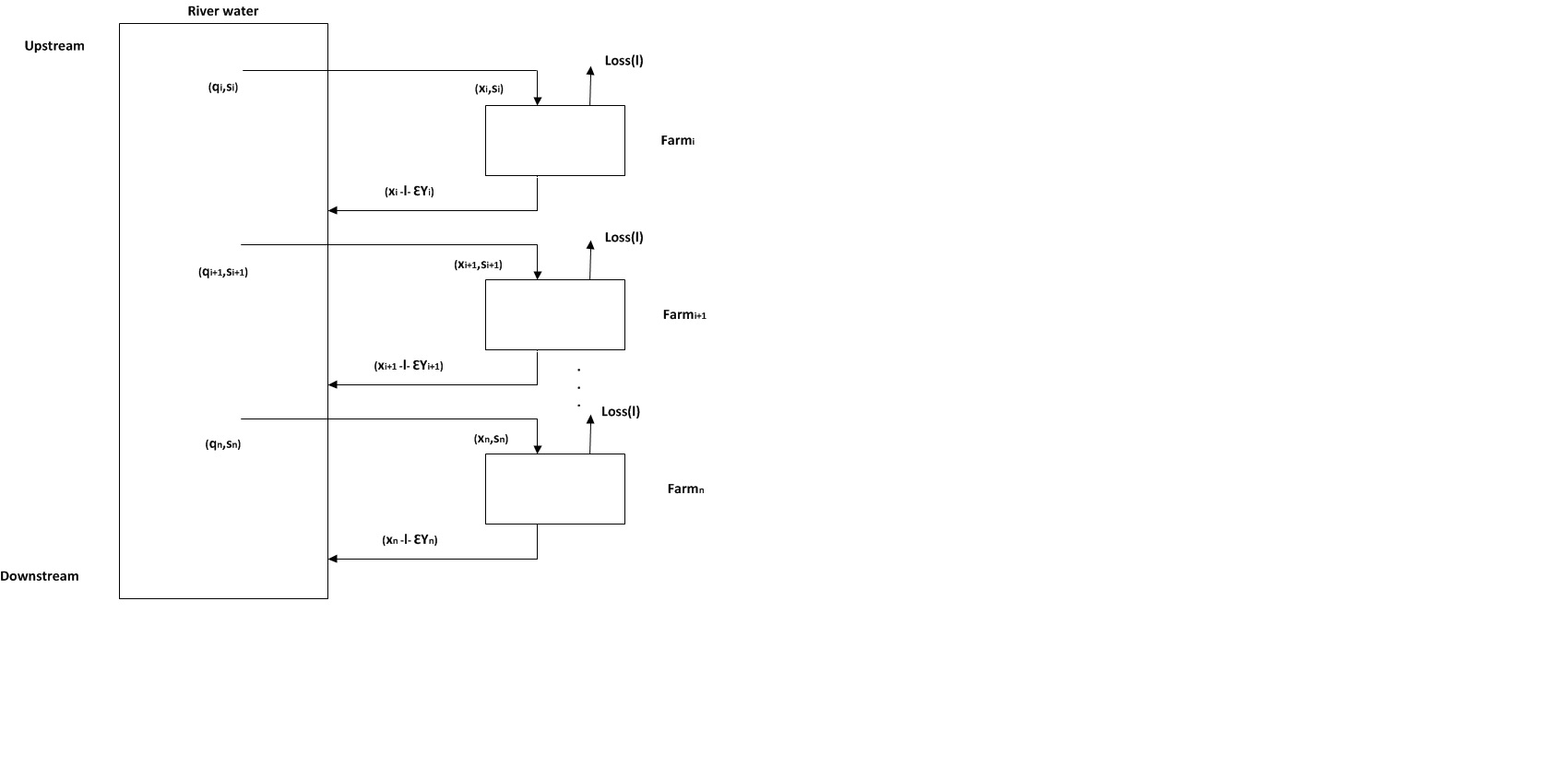
A conceptual framework developed by Ben Gal et al., (2013) has been applied and validated for optimal management of scarce and brackish irrigation water. The conceptual model is applied to the irrigation of Zea mays L. cv. Jubilee on Millville Silt Loam. In this model, it is shown that how water application should be distributed between upstream and downstream plots or farms. We show the scenarios where water is traded from upstream to downstream farms keeping in view that upstream farm holds the water rights.
The conceptual ANSWER model of irrigation containing conjunctive use of fresh and waste water predicts crop yields and water consumption and tracks the water flow and level of salinity along a river dependent on irrigation management decisions. The model considers a coupled agro-physical model, in which plant response to soil and climate parameters in addition to feedback is predicted. Furthermore, the model evaluates the impact of water shortage, salinity, and unproductive application on yield for exact crop, soil and climate conditions. We find that as salinity level and inefficiency increase, the upstream user must use less water and downstream user as a result uses better quantity and quality water to optimize the system yield.