Separating the interacting effects of climate, fertilization and crop on N2O emissions: Results from a 4-year multi-site field study of energy crops fertilized with fermentation residues in Germany
Abstract ID#: 33764
Multi-year field experiments with staggered replicate crop rotations conducted simultaneously at multiple sites with identical design can be used to generate concise N2O datasets for energy crops fertilized with OFR and have a large potential for separating fertilization and crop effects from climate-induced variability in N2O fluxes – particularly in combination with advanced statistics like generalized linear mixed models analysis.
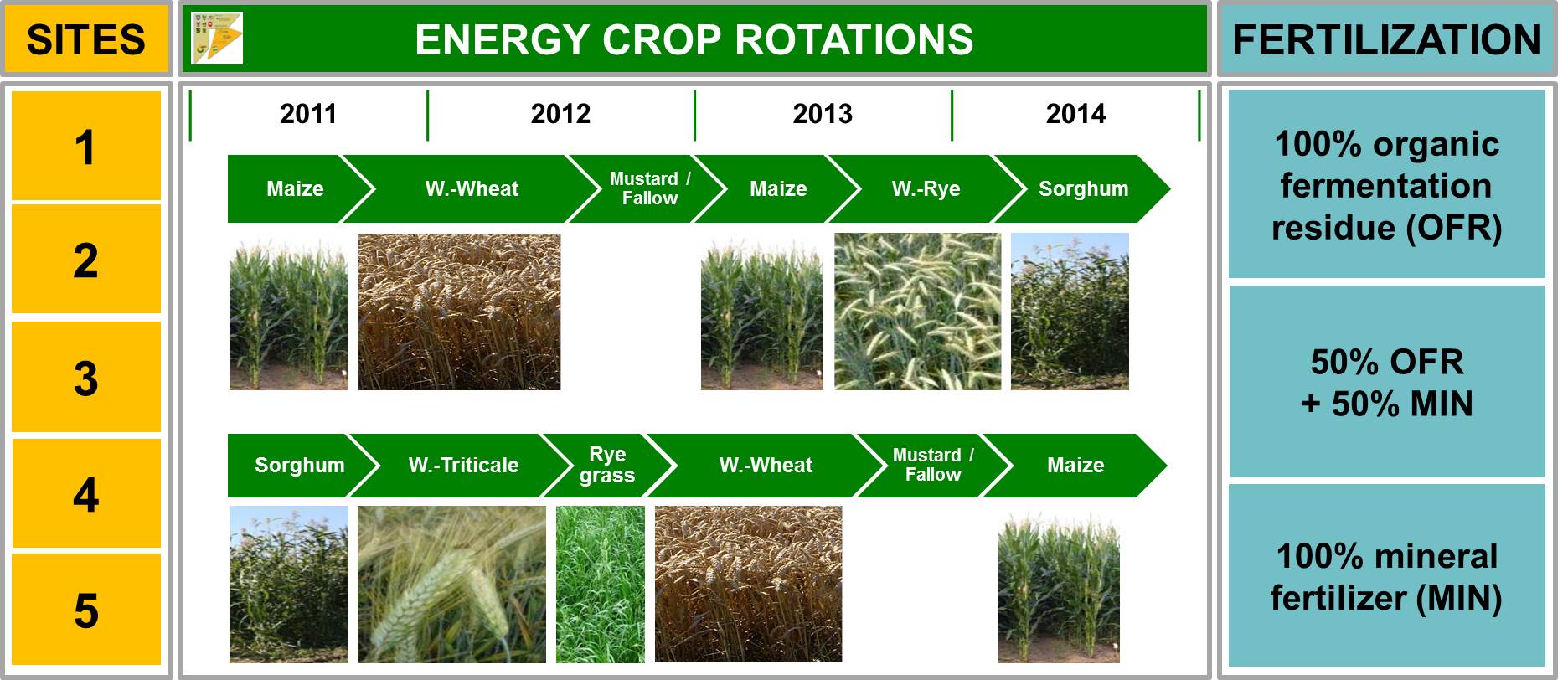
We will present results from a 4-year field study at 5 sites in Germany investigating the interacting effects of i) 3 N-fertilizer treatments (100% OFR, 100% mineral (MIN); 50% OFR + 50% MIN) and ii) 7 energy crops on N2O emissions. Study sites represent the major precipitation-frost classes relevant for N2O production in Germany (Jungkunst et al. 2006). Using identical sampling methods at all sites, N2O was measured periodically from 05/2011–09/2014 at 3 replicate plots per treatment using opaque non-flow-through non-steady-state chambers, 20-min interval sampling and gas chromatography. Measurements were conducted daily for 2–5 days after fertilization, and then bi-weekly. N2O fluxes were calculated via linear regression using standardized protocols for data processing and interpolation between measurements.