Nutrient Behavior at the Interface Between Terrestrial and Aquatic Ecosystems : Vegetated Buffer Strips as a Mean for Limiting Nutrient Leaching From Industrial Agricultural Fields to Streams
Nutrient Behavior at the Interface Between Terrestrial and Aquatic Ecosystems : Vegetated Buffer Strips as a Mean for Limiting Nutrient Leaching From Industrial Agricultural Fields to Streams
French Title: Le comportement des nutriments à l’interface entre les écosystèmes terrestres et aquatiques : Les bandes riveraines végétalisées comme mesure d’atténuation des nutriments lessivés depuis les champs sous culture intensive vers les ruisseaux
Abstract ID#: 34468
English Abstract:
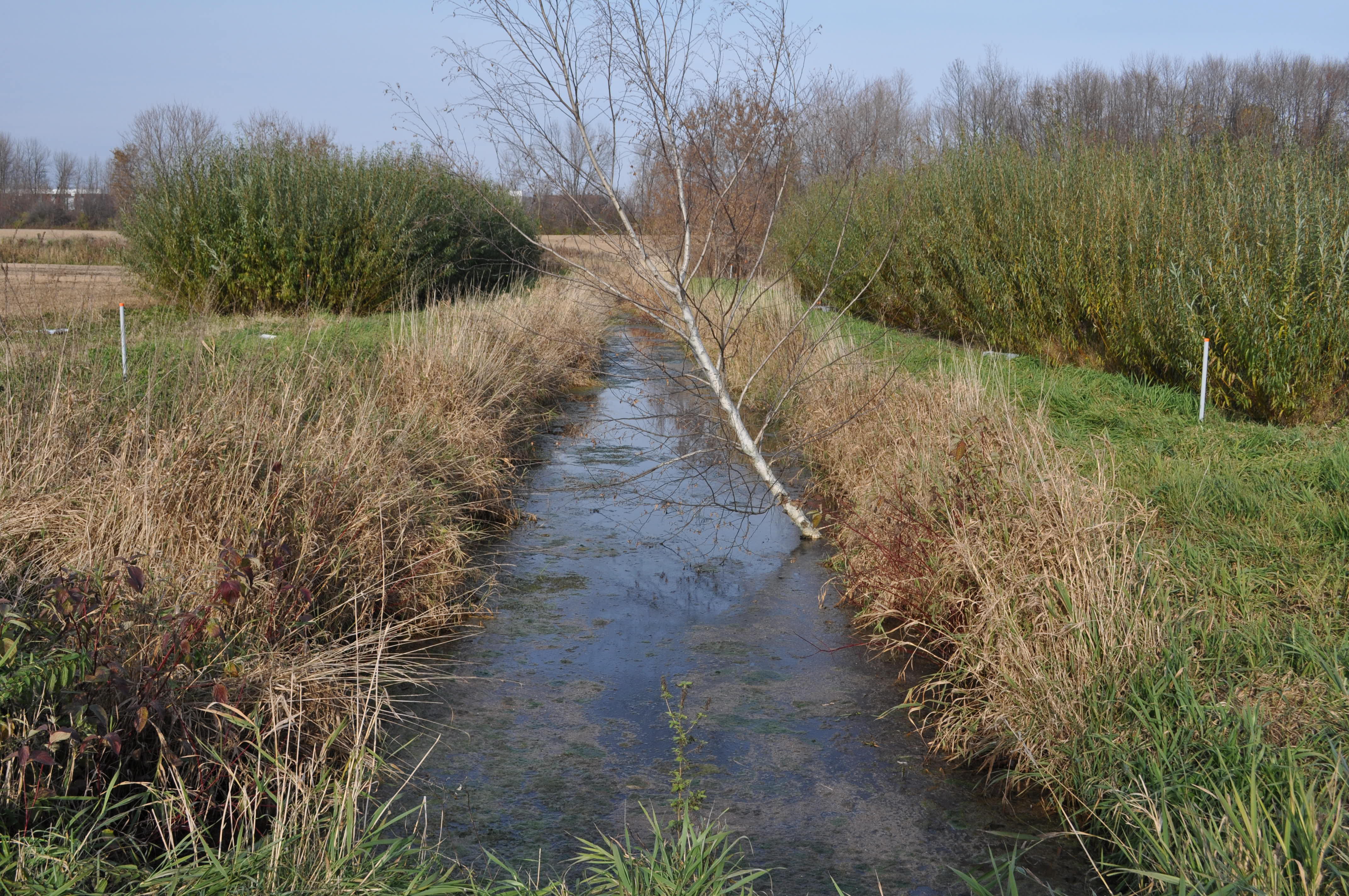
Industrial agriculture affects freshwater quality via excessive fluxes of nutrients. Vegetated riparian buffer strips (RBS) may sequester or delay nutrients exports from agricultural runoffs. A Quebec policy recommends 3m wide RBS to protect water, but the efficiency of narrow RBS remains questionable. On the outskirts of corn/soy fields, we compared spontaneous herbaceous 3m wide RBS with those of the same width but planted with willows (Salix miyabeana SX64) and designed for maximizing nutrient sequestration (increased biomass production) and export (harvested for energetic production). RBS were set up in a randomized block design and were monitored in two distinct agricultural environments, respectively characterized with organic soil and compacted sandy-loam soil. After fertilisation, both RBS types retained 77-98% of dissolved NO2+NO3 and effluents were conform to water quality guidelines (WQG: 10 mg/L); but ammonia, marginally retained by RBS at snowmelt, was literally discharged from the RBS following glyphosate-based herbicide field sprays and remained 3-10X above the WQG (1.5mg/L) throughout the year. Total phosphorus leachate was occasionally removed by the RBS, though dissolved phosphate was not. While Salix RBS produced 10X more biomass from 2011-2014, the non-harvested herbaceous RBS were statistically equivalent in efficiency for limiting nutrient leaching. Critical observations to be detailed in the presentation include differential effects of the RBS according to nutrient and speciation, agricultural activities, soil characteristics and water sampling depth (surface runoff versus underground water), as well as interesting links between nutrient removal and vegetation architecture. As RBS efficiency varies in space and time, a unique RBS width policy may not suffice to protect water resources; but adding the biomass production function to the RBS with Salix does not seem to hamper global efficiency.