Hungry ponds in a thawing world: Variations in subarctic pond runoff quality and quantity depend on peatland moisture and frost conditions
Hungry ponds in a thawing world: Variations in subarctic pond runoff quality and quantity depend on peatland moisture and frost conditions
Abstract ID#: 35338
English Abstract:
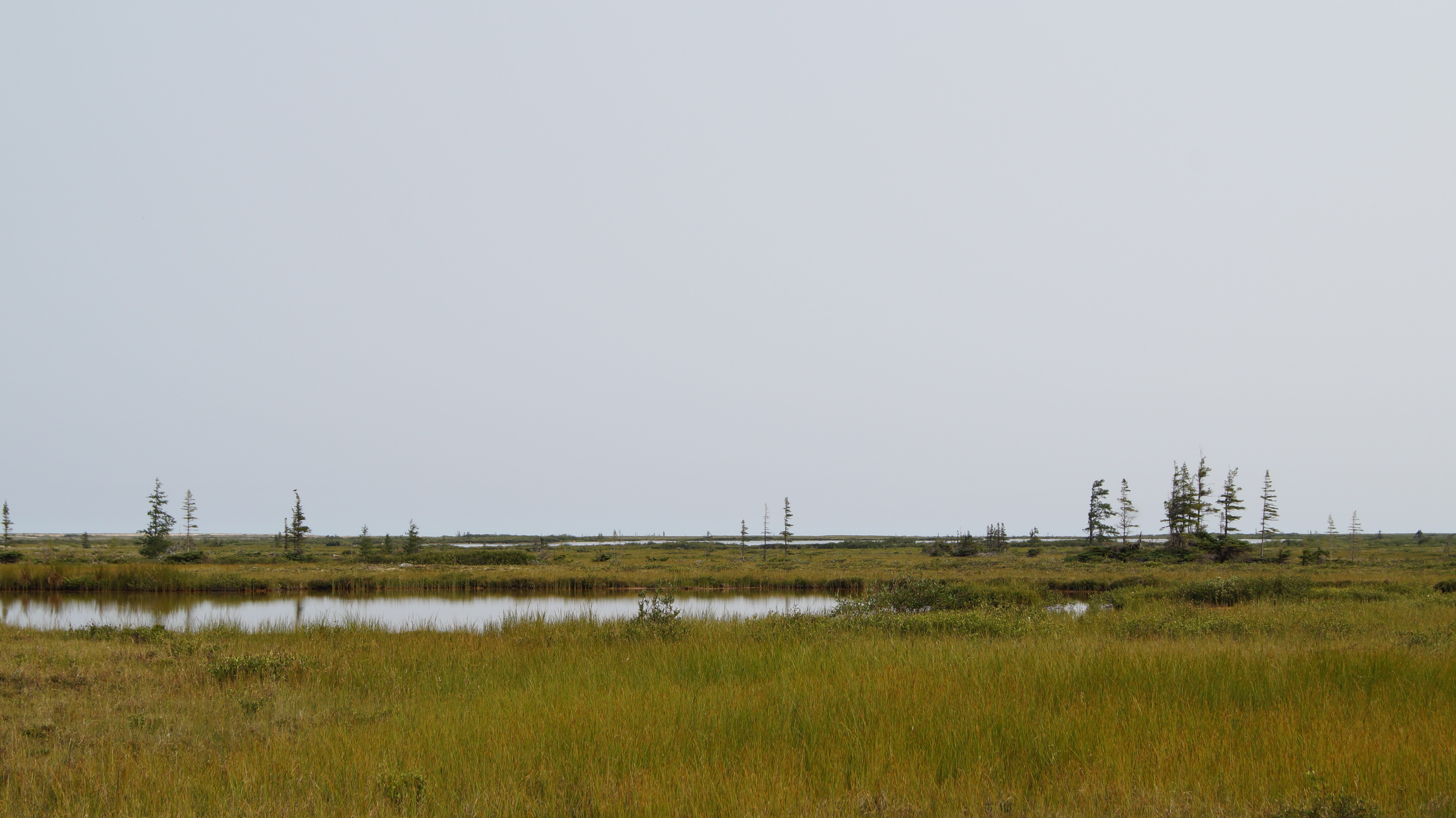
In subarctic permafrost environments, ecological productivity is often nutrient-limited, both in terrestrial and aquatic vegetation. The subarctic is experiencing significant climatic change, including rapid warming and changing precipitation patterns, which may result in changes in nutrient dynamics within terrestrial and aquatic systems and hydrologic transport between them. A change in nutrient dynamics may result in changes to vegetation growth, pond ecology, and food web stability in the North. The objective of this research was to characterize changes in runoff quantity and quality between peatlands and ponds over the snow-free summer seasons. Twenty-two ponds and five transects of piezometer nests along moisture gradients were instrumented to measure changes in hydrologic storage, frost table position, and water quality over two snow-free seasons (May to October) in Churchill, Manitoba, within the Hudson Bay Lowlands. Differences in antecedent moisture conditions across landscape units, combined with frost table position (inhibiting infiltration and storage) produced non-linear, threshold responses in runoff generation. Greater inputs were required to exceed storage (‘fill and spill’) when a lower frost table permitted deeper infiltration. Seasonal variations in groundwater chemistry were reflective of different layers of peat and mineral soil accessed at different times throughout the season, governed by frost table and water table positions. Varying thaw rates across landscape units (controlled by moisture and vegetation) resulted in changing groundwater pathways throughout the season. Changing hydrologic pathways combined with precipitation events throughout the season resulted in temporally variable nutrient concentrations in runoff and ponds. This work has implications for how nutrient dynamics and exchange between terrestrial and aquatic systems in cold regions may evolve under a changing climate.