Exploring Climate Science with WV Educators: A Regional Model for Teacher Professional Development
Abstract:
The professional development model outlined shows how to guide teachers to use a problem-based learning approach to introduce climate data and analysis techniques within a scenario context that is locally meaningful. This strategy engages student interest by focusing on regional and community concerns. Climate science standards are emphasized in the Next Generation Science Standards, but WV has not provided its teachers with appropriate instructional resources to meet those standards. The authors addressed this need by offering a series of climate science education workshops followed by online webinars offered to WV science educators free of charge with funding by the West Virginia Space Grant Consortium. The authors report on findings from this series of professional development workshops conducted in partnership with the West Virginia Science Teachers Association. The goal was to enhance grades 5-12 teaching and learning about climate change through problem-based learning.
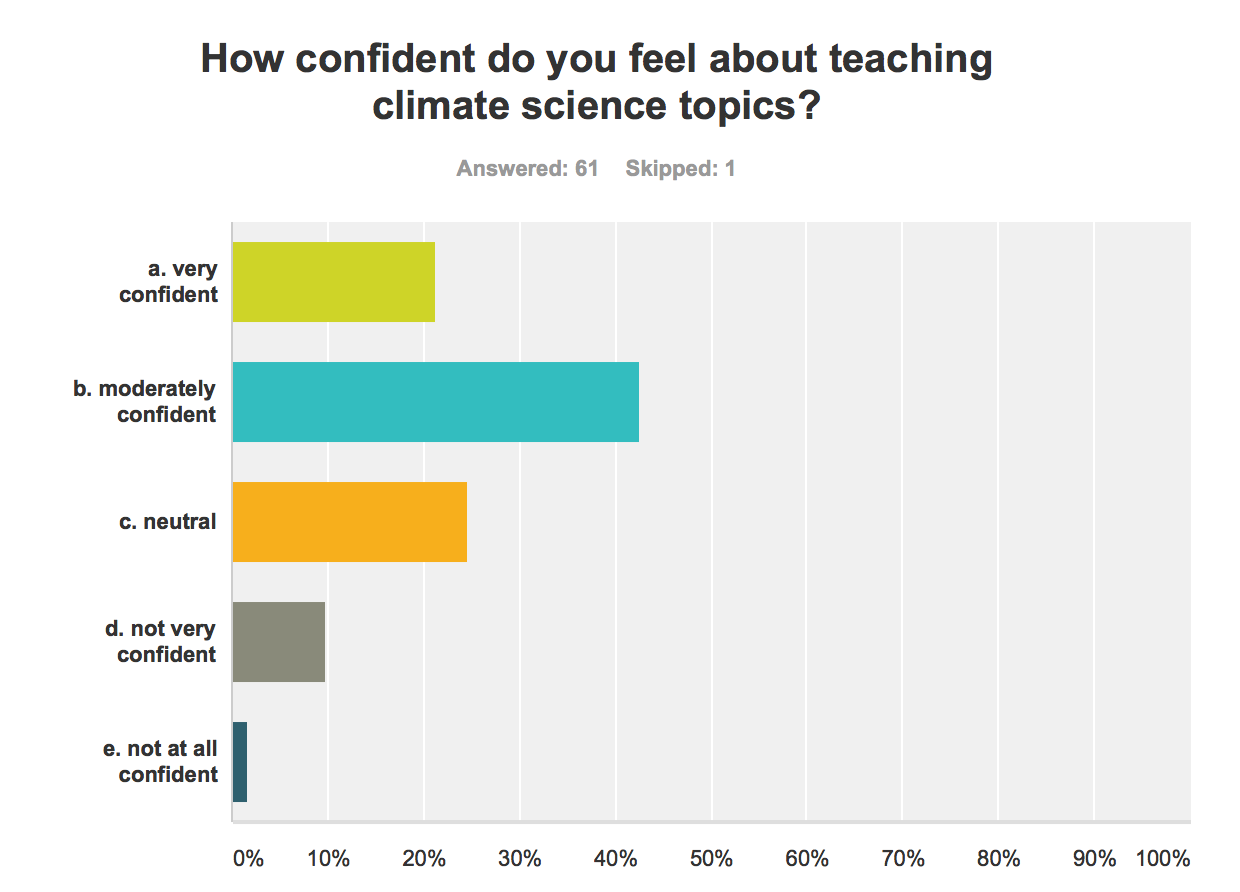
Prior to offering the climate workshops, all WV science educators were asked to complete a short questionnaire. As Figure 1 shows, over 40% of the teacher respondents reported being confident in teaching climate science content. For comparison post workshops surveys measure teacher confidence in climate science instruction after the professional development sessions. In summary, this report describes how this professional approach can serve as a regional model to address the need for climate science literacy throughout Appalachia.