Seasonal and Interannual Variability of Great Lakes Climate and Ice Cover: From Research to Forecast
Seasonal and Interannual Variability of Great Lakes Climate and Ice Cover: From Research to Forecast
Abstract ID#: 33058
English Abstract:
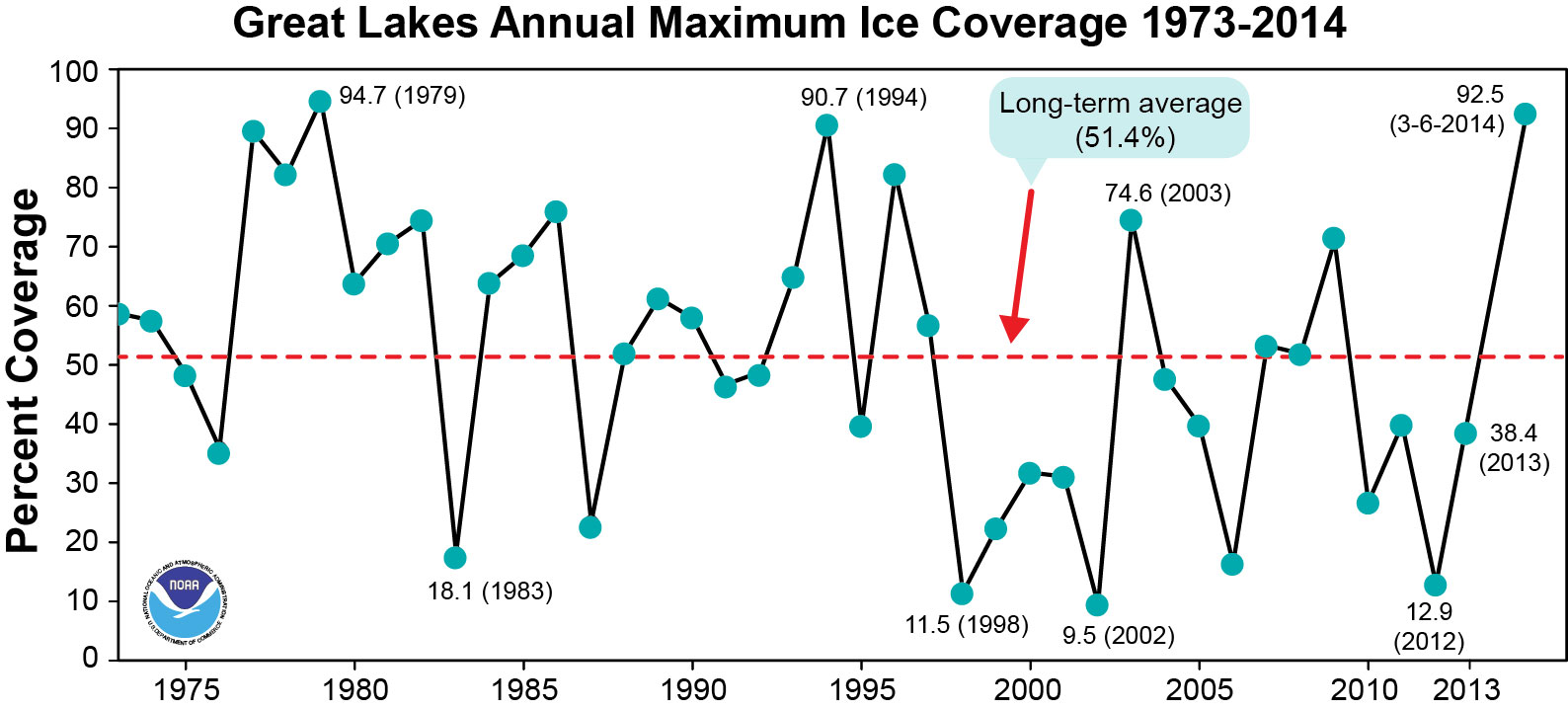
Over the past six years (since 2007), GLERL and CILER team has studied Great Lakes ice and regional climate in response to global climate changes and how to transfer scientific research results into predictions of lake ice on the scales of several days to several months. It was found that both NAO and AMO have a linear impact on lake ice, while ENSO and PDO have nonlinear (quadratic) impacts on lake ice, but none of them solely dominates the Great Lakes regional climate and lake ice cover. The combined effects of NAO, ENSO, AMO, and PDO on lake ice provide high predictability skills using statistical regression models. The new findings were incorporated into a statistical regression model, which can project medium-range lake ice cover only using projected indices of NAO, Nino3.4, AMO, and PDO one to several months ahead of time. For the first time, fully-coupled Great Lakes Ice-circulation Models (GLIM) with both dynamics and thermodynamics have been developed at GLERL/CILER to simulate and investigate the lake ice variations on the synoptic, seasonal, interannual, and decadal time scales. The hindcast results were validated using in situ, airborne, and satellite measurements. The validated GLIM has been used since the 2010-2011 ice season to forecast Great Lakes ice cover concentration, thickness, velocity, and associated air-ice-sea variables for up to five days in advance.