
The Challenges of Research at Varying Geological Spatial Scales for the Geoarchaeological Study of Prehistoric Stone Tool Quarry Sources
The Challenges of Research at Varying Geological Spatial Scales for the Geoarchaeological Study of Prehistoric Stone Tool Quarry Sources
French Title: Les défis de travailler à différentes échelles spatiales géologiques pour l’étude géoarchéologique des carrières préhistoriques et sources de matière première lithique
Previously Published Material: Some archaeological and geological examples used in the presentation have been published or are in press. Other examples represent new data from other ongoing research projects. The paper is an overview of our long term research approach and program.
Abstract ID#: 33662
English Abstract:
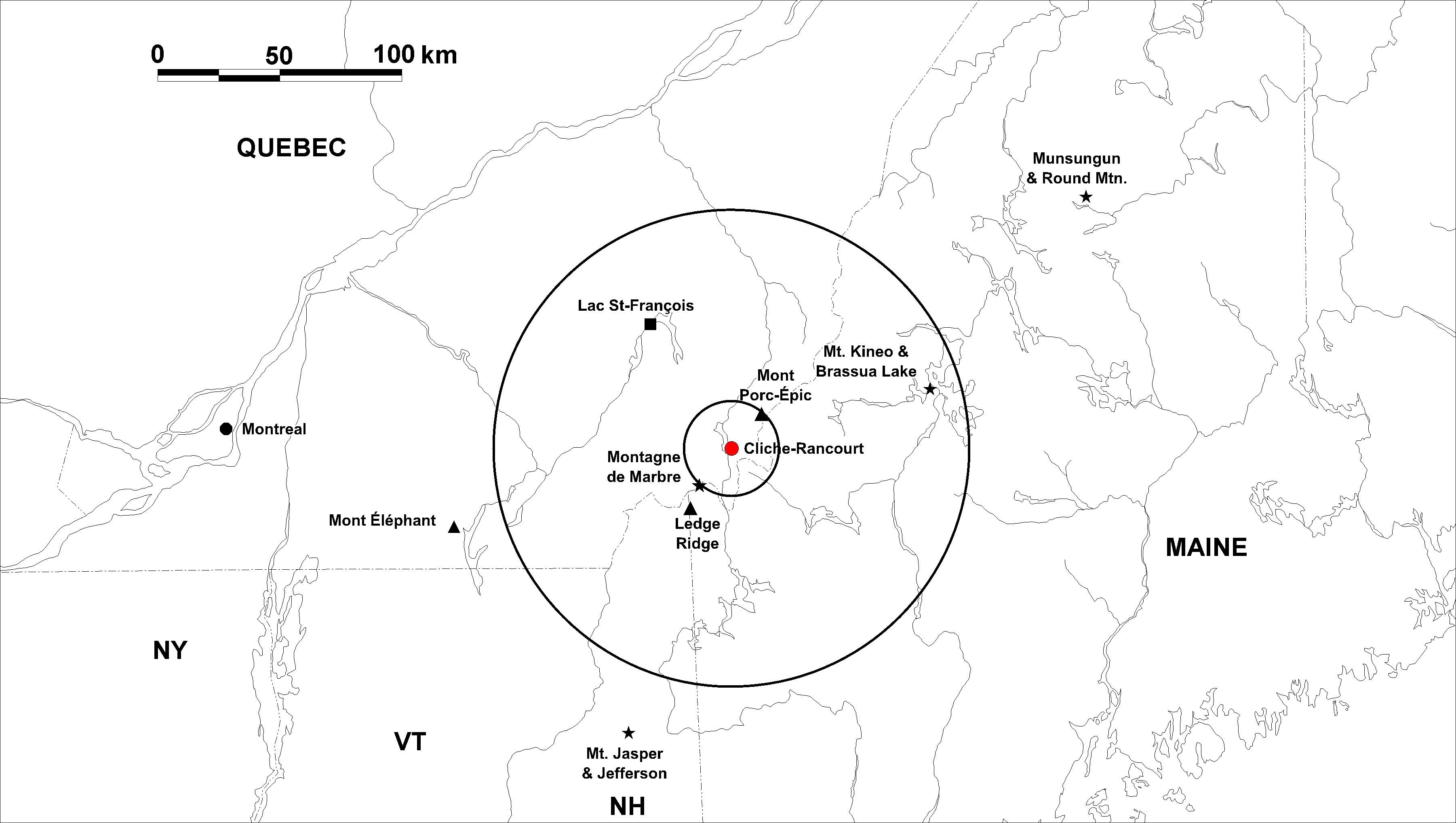
It is commonplace for geologists to work at various spatial and time scales. The geoarchaeologist must add to this research the variable scales at which humans interact with each other and the environment. This represents an added level of complexity in the analysis, description and interpretation of geoarchaeological data. This paper focuses on the lithic raw materials that humans and their ancestors have used for more than 2 million years to manufacture cutting and scraping tools. The material to make these tools is not geologically ubiquitous, being primarily limited to highly siliceous, conchoidal rocks like cherts, flints, quartzites, rhyolites, and obsidian. Hunter-gatherers, and later settled agriculturalists, used many different geological sources both in primary bedrock and secondary surficial settings. On any given prehistoric site in North America it is common to find lithic raw materials that come from the area surrounding a site, from a regional setting (<100 km) and from further afield, sometimes over 1000 km distant. Some of these materials were obtained by going directly to a bedrock source and extracting the material at a quarry, while other materials were obtained through trade with neighboring groups. It is therefore imperative that the archaeologist know with precision where the materials come from in order to reconstruct past patterns of group movement in a territory, and also to understand the interaction between groups through trade. In this paper I present examples from aboriginal sites in northeastern North America dating from the earliest Paleoindian occupations to the time of European contact to demonstrate how the geoarchaeologist must continually adjust the scale of analysis depending on the time period, the culture studied, or simply the lithic material and its specific technological qualities. This has significant impacts on geoarchaeological fieldwork, sampling, and subsequent geochemical analyses.
French Abstract:
Il est normal pour un géologue de travailler à différentes échelles de temps et d’espace. Le/La géoarchéologue doit ajouter à ce défi les échelles variables auxquelles les humains interagissent avec l’environnement et avec les autres humains. Ceci représente un niveau additionnel de complexité qui s’ajoute à la description, l’analyse et l’interprétation des données géoarchéologiques. Nous allons cibler ici les matériaux lithiques que les humains et leurs ancêtres ont utilisé pour fabriquer des outils depuis plus de 2 millions d’années. Ce type de matériel lithique n’est pas ubiquiste dans le registre géologique et se limite surtout aux roches siliceuses comme le chert, le silex ou la rhyolite. Les chasseur-cueilleurs, et par la suite les groupes d’agriculteurs, ont utilisé des roches provenant de contextes géologiques primaires (affleurements rocheux) et secondaires (dépôts de surface). Certains de ces matériaux étaient obtenus par accès direct aux carrières alors que d’autres étaient obtenus par l’entremise de l’échange avec des groupes voisins. Il est donc capital pour l’archéologue de connaitre l’origine précise de ces roches afin de reconstituer les déplacements des groupes dans un territoire dans le passé ou de décrire les relations et interactions entre groupes préhistoriques par le biais de l’échange. Dans cette conférence je présente des exemples tirés de la préhistoire du Nord-est nord-américain allant des plus anciennes populations paléoindiennes jusqu’au moment du contact avec les européens afin de démontrer comment le/la géoarchéologue doit ajuster continuellement les échelles d’analyse tout dépendant de la période étudiée, ou les cultures, ou les matériaux et leurs qualités technologiques spécifiques. Ceci a des impacts importants sur le travail de terrain en géoarchéologie, sur l’échantillonnage et sur les analyses subséquentes en géochimie.