Examining Interactions Between Large Woody Debris, Beach-dune Morphodynamics and Shoreline Positions Using Remotely Sensed Data
Examining Interactions Between Large Woody Debris, Beach-dune Morphodynamics and Shoreline Positions Using Remotely Sensed Data
Previously Published Material: A portion of the talk reports on an analytical method using LiDAR and related results from a 2010 study i published in Geomorphology 118: 33-47.
Abstract ID#: 36145
English Abstract:
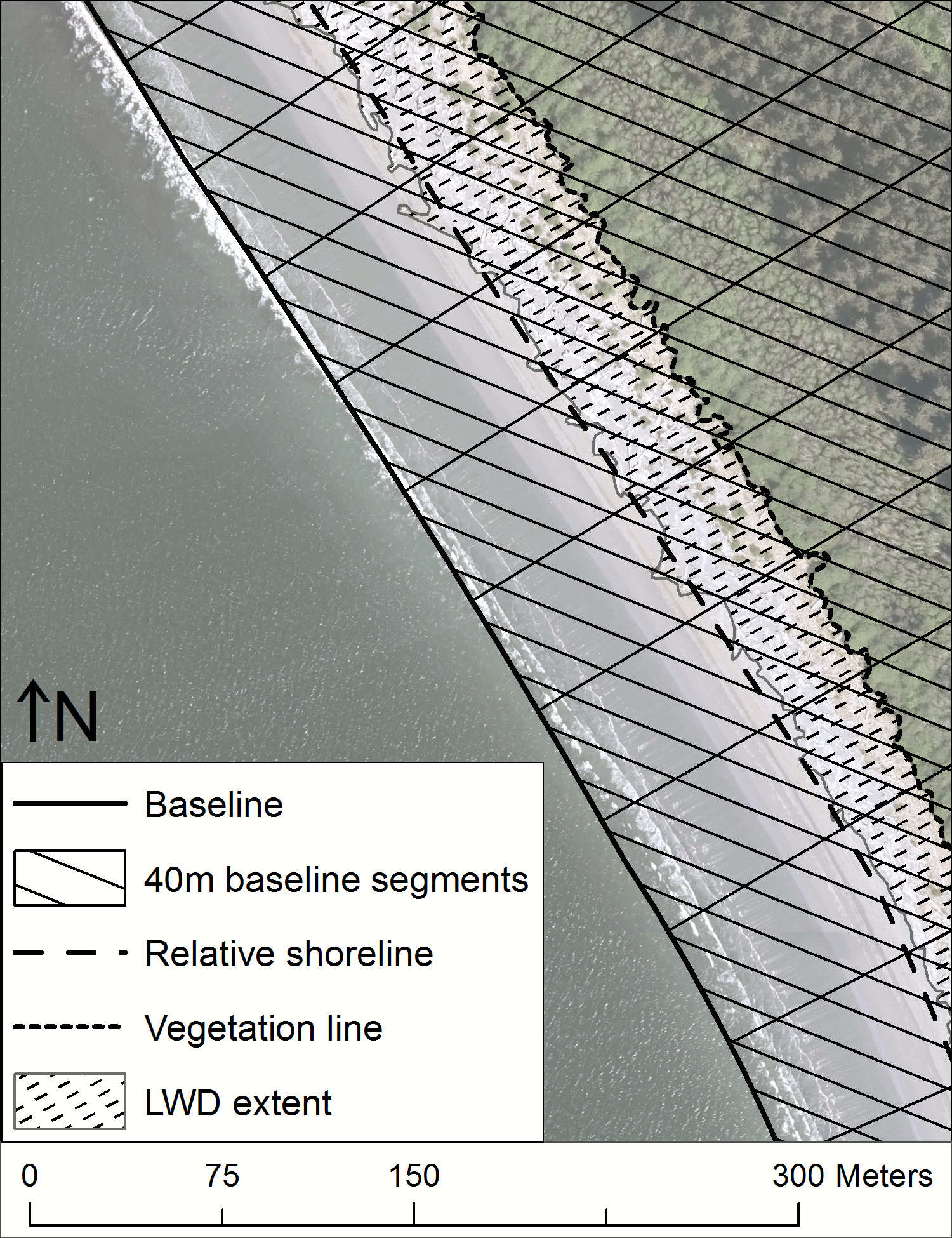
Large woody debris (LWD) is widespread on beaches in British Columbia and consists mostly of historic logging material. In some areas, LWD traps significant amounts of sediment and can modify coastal sediment budgets, alter beach-dune morphodynamics and affect shoreline positions and vegetation stabilization rates. This paper presents research that examines relations between LWD, sediment storage, and beach-dune geomorphology using remotely sensed data. One method uses aerial LiDAR and orthophography to quantify aeolian sand deposition in LWD on Haida Gwaii. Sand storage ranged from 9.19×10⁴ to 1.39×10⁵ kg m-1 beach width with a further storage capacity of 1.04 to 1.70×10⁴ kg m−1. The capacity for deposition in LWD modulates landward sand transfer and affects foredune sediment budgets and morphodynamics. The additional store of sediment in LWD can enhance incipient dune development and can increase the buffering capacity of beaches against wave erosion and storm surges. Another method uses the USGS Digital Shoreline Analysis System and a supervised classification to analyze changes in LWD coverage, shoreline position and vegetation colonization from historical aerial photography at Pacheedaht Beach near Port Renfrew, BC. LWD coverage declined between 1968 and 2013 by 38%, which is consistent with other findings in the region. Despite these declines, the shoreline prograded 71.6 m and vegetation colonized seaward 48.6 m atop former dune and LWD deposits. These trends are interspersed, however, with intervals of shoreline retreat and pronounced LWD decline. Trends in shoreline position and LWD coverage are generally synchronous suggesting a direct, positive relationship between LWD and shoreline change. This is hypothesized to result from increased sediment storage in LWD and enhanced beach-dune development. Provided that key sources of error are quantified and incorporated, these methods provide simple, systematic and statistically robust means to quantify the geomorphic and sediment budget impacts of LWD on beaches.